The direct answer
Before plumbing first fix, decide which bathroom outlets need prompt hot water, how the selected source serves them, where the real pipe routes run, and whether a recirculation strategy is justified. Record the operating logic, insulation, temperature-control responsibility, isolation and maintenance access, then define how performance will be checked at handover. The useful buyer question is not simply whether a pump is included. It is whether the complete arrangement gives practical delivery without creating unnecessary heat loss, stagnant branches, concealed components or continuous energy use.
Map the actual user journeys
List the shower, bath, basin and any specialist outlets, then rank them by frequency and tolerance for waiting. A guest powder-room basin used briefly has a different pattern from a daily master shower. Note simultaneous morning demand, long periods of non-use and whether the source also serves a kitchen or utility area. This user map prevents a single headline requirement from being applied to every outlet. It also gives the services designer a clear basis for comparing a compact distribution route, a local source, a controlled loop or another engineered solution.
Compare three design approaches
A compact direct route is simple and can reduce stored water between source and outlet, but the building layout may limit it. A central recirculation loop can reduce waiting at remote branches, yet its pipework, controls and heat loss need careful design. A local water-heating source can shorten delivery distance but adds space, power, drainage, access and replacement considerations. None is universally best. Compare the whole system, including plant location, pipe volume, insulation, controls, maintenance and the effect on the rest of the property.
Use current guidance without copying foreign limits
CIBSE publishes a Dubai-specific public-health design guide covering domestic hot-water generation and distribution, while Dubai Municipality provides the Dubai Building Code as the local reference framework. The US Environmental Protection Agency’s 2026 WaterSense guidance is useful for understanding how stored pipe volume affects wasted water and why demand-controlled strategies may be considered. Its programme limits are not Dubai requirements. Use them as decision evidence only, and have the appointed professional apply the current local code and project conditions.
Coordinate controls and safe temperatures
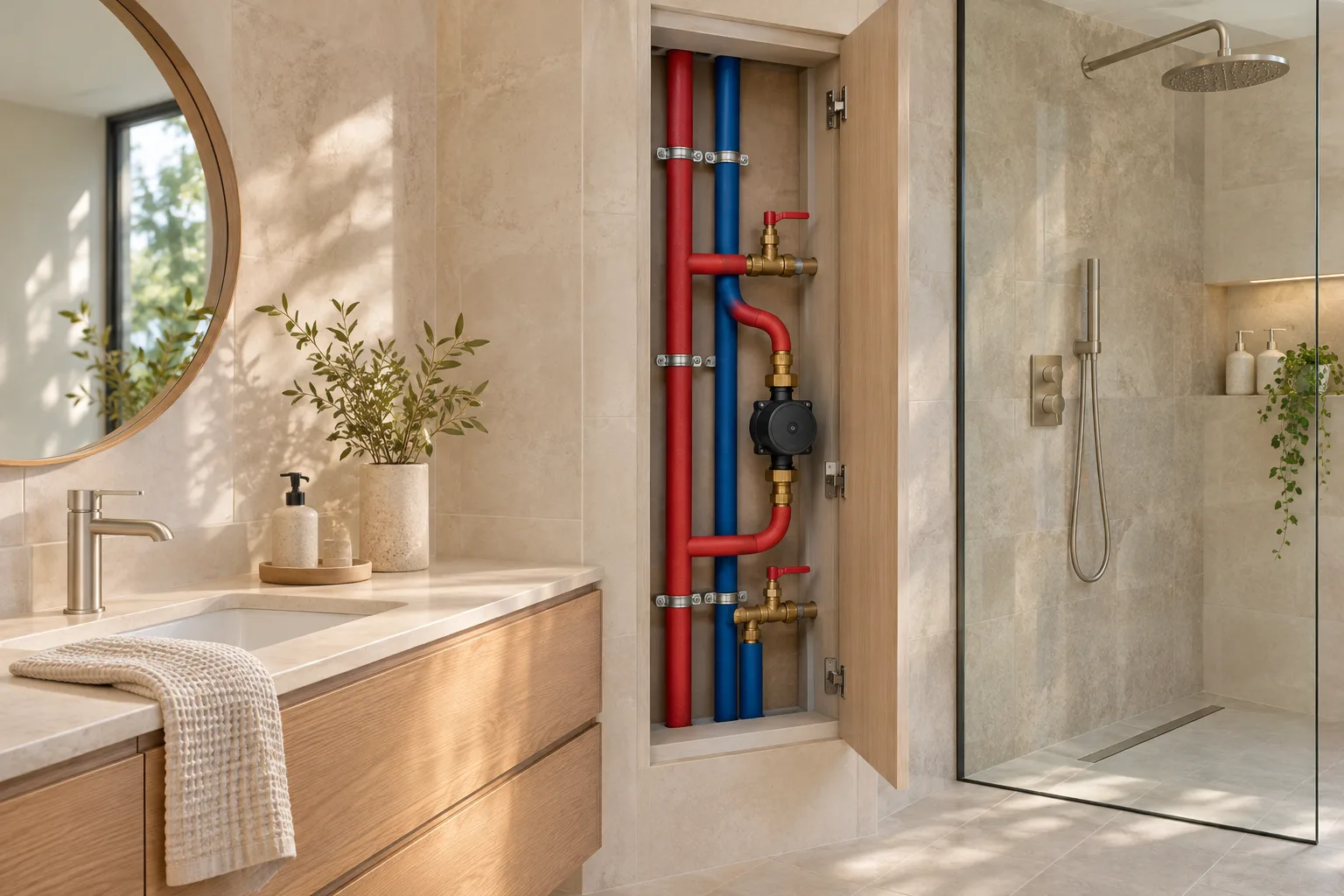
The brief should state who selects the operating temperature, any return-temperature logic, mixing or anti-scald devices, pump control and shutdown method. These decisions interact with water hygiene, user safety and energy use, so they belong with the professional system design rather than a bathroom accessories schedule. Do not hide a pump or control valve behind fixed stone or joinery. Show access panels, isolation points and replaceable components on coordinated drawings, and keep electrical interfaces separate from wet-area finish decisions.
Planning example
A renovated home has a new master bathroom far from the retained central water heater. The brief records that the shower and two basins are daily priorities, while a freestanding bath is occasional. The consultant compares the measured pipe route with a controlled return loop and an alternative local source, including plant space, heat loss, electrical implications and service access. The selected arrangement is then shown on first-fix drawings and given a commissioning check. This planning example does not prescribe a system or promise a universal delivery time.
Pre-first-fix checklist
Close these items before walls, floors and ceilings hide the distribution routes.
- Every hot-water outlet and its usage priority are listed.
- The source, actual pipe route and any return route are shown on coordinated drawings.
- Pipe sizing, insulation and control strategy are assigned to a competent designer.
- Isolation, balancing, mixing and replaceable components remain accessible.
- Waterproofing, structure, electrical services and joinery do not conflict with access.
- Commissioning records identify safe temperatures, control operation and agreed delivery checks.
- Operating information and concealed-route records are included in the handover pack.
Make quotations comparable
Ask each bidder to identify the assumed water-heating source, pipe material and insulation specification, control equipment, valves, access panels, testing and documentation. Separate base work from optional recirculation or plant changes. A low figure may omit controls, electrical coordination, balancing or reinstatement; a high figure may include equipment the layout does not need. Require exclusions and design responsibilities to be explicit. This turns a vague comfort request into a scope that can be priced and reviewed without encouraging contractors to choose a hidden solution on site.
Define a useful handover record
The handover should show the installed source and distribution arrangement, labelled isolation points, control settings, accessible components and approved product information. Ask the commissioning record to identify the test conditions rather than presenting one unexplained timing result. Note which outlets were checked, whether the system began from a cold or recently used state, and how any demand control was activated. Record safe outlet temperatures using the project’s approved method, but do not publish them as universal settings. Include operating guidance for periods of absence and the maintenance route for pumps, mixing devices or local heaters. This information helps the owner operate the system as designed and gives a future service technician evidence instead of concealed assumptions.
Limitations to keep visible
A bathroom article cannot determine safe storage temperatures, pipe sizes, pump duty or hygiene controls for a specific property. Those depend on the building, source, route, usage, applicable standards and professional calculations. Recirculation can improve convenience but may increase distribution losses if poorly controlled or insulated. A local heater may shorten the route but bring other constraints. Existing apartments may also have landlord or building-management restrictions. Avoid changes to live water, electrical or concealed building systems without approved design and competent installation.
The next step
Ask for a one-page hot-water delivery schedule before first-fix sign-off. It should pair each outlet group with the source, route, control approach, access point and handover test. Review it with the bathroom designer, plumbing consultant, electrical team and joinery contractor. If the source or route is still provisional, hold the affected walls and cabinetry rather than closing them around an assumption that will be expensive to correct later.
Sources & further reading
Make this useful for your project.
A review of your property and priorities can turn general guidance into a defined brief.
Explore Bathroom DesignDiscuss your project